
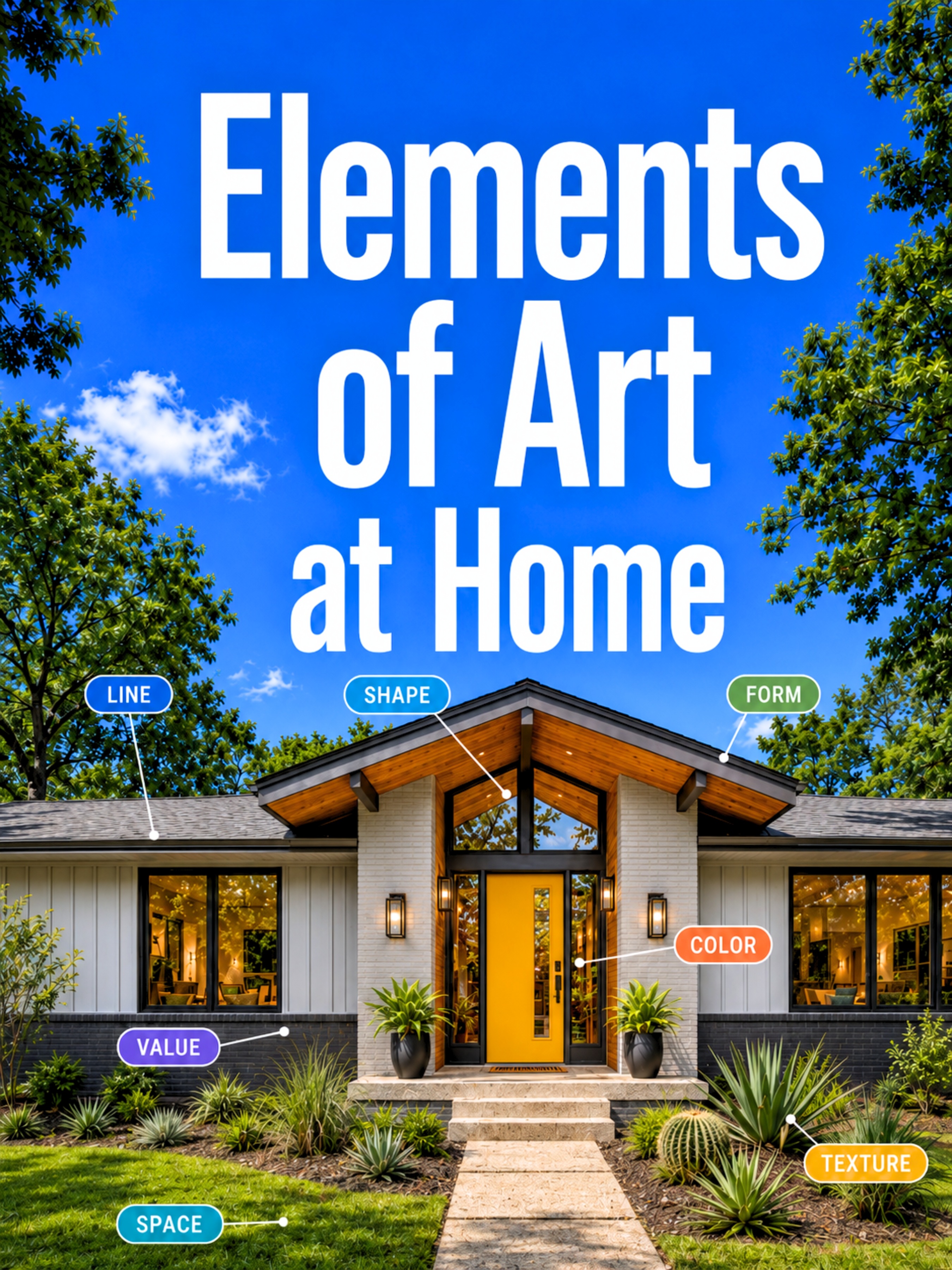
The Building Blocks of Every Home
The Elements of Art are the visual tools used to create and understand art: line, shape, form, color, value, texture, and space. They are the building blocks of design and are present throughout every home.
A roofline is a line. A window is a shape. A porch has form. Brick adds texture. Paint creates color. Light and shadow establish value. The arrangement of rooms, furniture, landscaping, and outdoor living areas defines space.
Real estate is built from these elements.
Line appears in hallways, trim, fences, pathways, siding, and landscaping. It guides the eye, creates movement, and can make a property feel taller, wider, orderly, or active.
Shape appears in windows, doorways, floor plans, patios, and garden beds. Repeated shapes create unity, while competing shapes can make a property feel disconnected.
Form refers to three-dimensional objects and structures. The house, furniture, trees, porches, and architectural details all have form. Form influences whether a space feels substantial, inviting, open, or crowded.
Color affects mood and first impressions. Exterior paint, interior finishes, flooring, plants, and natural light establish the character of a home.
Value describes the relationship between light and dark. Dark wood floors, light oak cabinets, painted walls, and lighting choices affect contrast, depth, and the visual weight of a space.
Texture includes how a surface feels and how it appears to feel. Wood, stone, brick, glass, fabric, metal, grass, and foliage add depth and character.
Space includes the areas occupied by objects and the open areas around them. Room proportions, ceiling height, furniture placement, and outdoor living areas shape how comfortable and usable a property feels.
Buyers often respond to these elements before they can name them. A room may feel calm, a landscape welcoming, or an exterior visually strong. A seller may sense that something feels unfinished but struggle to identify the problem.
Understanding the Elements of Art provides the vocabulary to recognize those choices. Buyers can better evaluate how a home functions and feels. Sellers can make clearer decisions about presentation, improvements, landscaping, and photography.
Art is part of everyday real estate. It is present in the way homes are designed, arranged, maintained, and experienced. Learning to see these elements changes how we understand a property and how we live within it.