
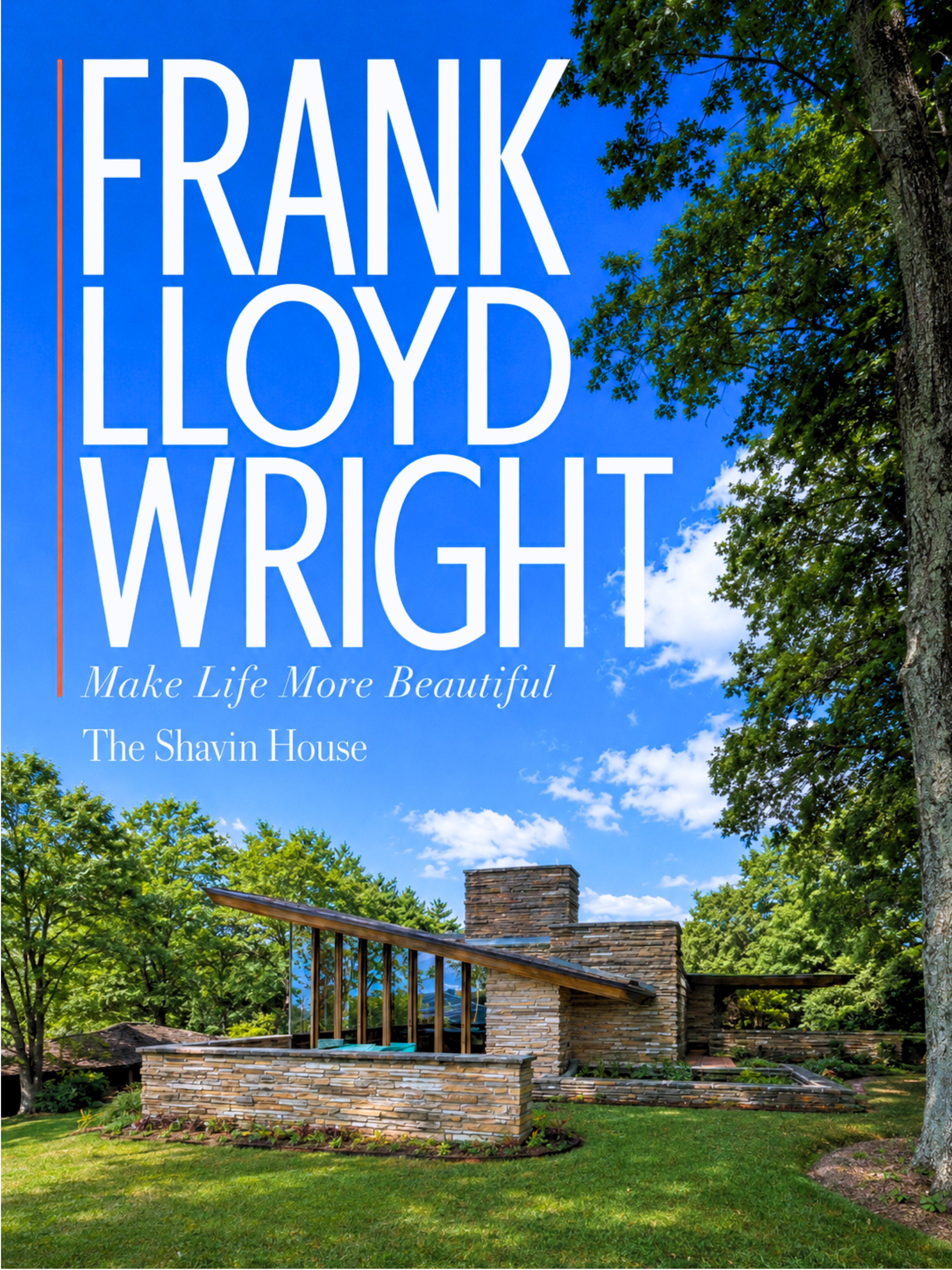
Frank Lloyd Wright’s Only Tennessee Home: The Shavin House on Missionary Ridge
Before real estate, I was an art teacher. That background shapes the way I look at homes. The whole is often greater than the sum of its parts, and while a house is walls, rooms, and square footage, a home is a work of art. Few architects understood that better than Frank Lloyd Wright. Wright believed architecture, furniture, materials, light, and landscape should all work together. He designed the experience of living in a home, down to the details.
His influence is hard to overstate. Architectural Record selected 12 Frank Lloyd Wright designs for its list of the 100 most important buildings of the 20th century, including Fallingwater, the Guggenheim Museum, Taliesin, and Taliesin West. That is what makes the Shavin House in Chattanooga so interesting. It is the only Frank Lloyd Wright residence in Tennessee, and it is now for sale.
The Tennessean recently featured the Shavin House. The home was completed in 1952 and sits on Missionary Ridge. It is built with Tennessee stone and cypress, with long horizontal lines, large windows, built-in furniture, concrete floors, and a strong connection between the interior and the surrounding landscape. From an art teacher’s perspective, what stands out is the intention behind it. The materials, shapes, colors, light, and space all support one another. Every detail feels deliberate.
Wright changed the way American homes were designed. Open floor plans, natural materials, large windows, built-in elements, and indoor-outdoor living are common now, but they were central to his work decades ago. When asked what is art, I side with the crowd that answers, what is not? A home may be carefully designed, crowded with art and objects, stripped down to the practical, or built around the life happening inside it. Every choice says something about the people who live there.
Frank Lloyd Wright understood that a home could shape the way we live, feel, and see the world. The Shavin House is proof that architecture can speak long after the architect is gone. Today, a piece of architectural history is on the market for $1.6 million.